No single "perfect" posture exists—the best posture is your next posture. Neutral spine alignment provides a foundation, but positional variation throughout the day supports comfort and circulation better than rigid adherence to one position.
Postural Foundation
Posture Awareness for Desk Workers
Understanding postural positioning and neutral spine alignment supports comfortable, productive desk work. This educational guide covers foundational posture concepts and awareness practices for office environments.
Understanding Neutral Spine
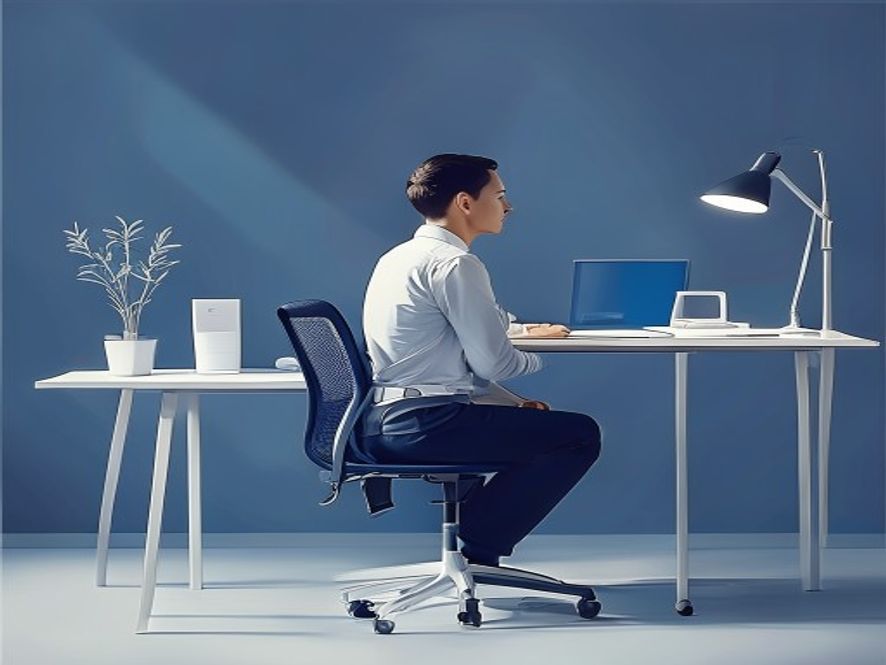
Neutral spine positioning is the foundation of ergonomic desk work. It refers to maintaining your spine's natural curves whilst seated.
Cervical Curve
The natural inward curve of your neck. Your head sits balanced above your shoulders, with chin parallel to the ground when looking forward.
Thoracic Spine
The middle back region. In neutral position, your chest is open, shoulders relaxed, and shoulder blades slightly engaged but not squeezed.
Lumbar Support
Your lower back has a natural outward curve. Proper lumbar support from your chair maintains this curve, crucial for comfortable seated work.
Pelvic Base
Your pelvis is the foundation of spinal alignment. Sitting with weight balanced on your sit bones and feet flat distributes pressure evenly.
Seated Posture Checklist
Use this checklist throughout your working day to maintain postural awareness. These are informational guidelines for comfortable positioning, not prescriptive medical advice.
- Feet: Flat on floor or footrest, not dangling or wrapped around chair legs
- Knees: At 90-degree angle or slightly open
- Pelvis: Tilted slightly forward, sitting on sit bones
- Lower Back: Supported by chair lumbar, maintaining natural curve
- Torso: Upright, chest open, shoulders relaxed
- Arms: Resting on armrests or desk at elbow height
- Neck: Aligned above shoulders, head not extended forward
- Eyes: Looking slightly downward at screen, not straining upward
Common Postural Patterns at Desks
Office workers often develop habitual posture patterns. Awareness is the first step toward change.
Forward Head Posture
Pattern: Head extends forward beyond shoulders, often from monitor too low or close keyboard work.
Awareness: Notice when your chin drifts forward. Gently draw it back toward a more neutral position.
Support: Raise your monitor and take frequent visual breaks.
Rounded Shoulders
Pattern: Shoulders roll inward, collapsing the chest. Common when stressed or focused on close work.
Awareness: Periodically roll shoulders back and take a deep breath to open your chest.
Support: Armrest height adjustment and movement breaks help.
Posterior Pelvic Tilt
Pattern: Pelvis tilts backward, flattening lumbar curve. Often happens when sitting too far back in chair.
Awareness: Feel your sit bones, then gently tilt pelvis forward to restore natural lower back curve.
Support: Lumbar support cushion and proper chair height.
Asymmetrical Sitting
Pattern: Weight shifted to one side, often crossing legs or leaning.
Awareness: Check whether your weight is balanced on both sit bones. Uncross legs and rebalance.
Support: Conscious reminders during work hours support more symmetrical positioning.
Movement and Postural Change
Postural awareness improves when combined with regular movement and positional variety.
30 min
Seated work, postural check
60 min
Movement break, change posture
90 min
Extended position change, walk
120 min
Lunch or substantial break
Suggested timing for postural reset and movement throughout your working day.
Developing Postural Awareness
Building awareness is a gradual process. These practices support development of postural habits.
1
Periodic Checks
Set reminders to pause and assess your posture every 30–60 minutes. Notice your position without judgment.
2
Body Scan
Mentally scan from feet to head, noting where you feel tension or misalignment. This builds bodily awareness.
3
Small Adjustments
Make micro-adjustments: shift weight on sit bones, adjust monitor height, relax shoulders. Continuous small changes accumulate.
4
Movement Variation
Change positions deliberately throughout the day. Standing desk time, different chair positions, and movement breaks all contribute.
Frequently Asked Questions
Awareness can develop within weeks, but established postural patterns take longer to change. Consistent practice, environmental support (good chair, desk setup), and movement breaks all accelerate the process.
No. Posture awareness is informational and educational. If you experience pain, injury, or medical concerns, consult qualified healthcare professionals. Our guidance complements professional treatment but does not replace it.
No. Rigid posture creates tension and fatigue. The goal is to develop awareness and maintain neutral alignment most of the time, whilst allowing natural movement and position changes throughout the day.
Your Next Step
Combine postural awareness with an optimised desk setup for the best results.